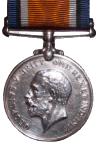
Lance Corporal 42207 James Winstanley

Regiment/Unit: Somerset Light Infantry - 1st Bn.
Theatre of War: France & Flanders
Age at death: 28
Date of death: 24th of October 1918
Born: St Helens, Lancs
Resided: Birmingham
Burial / Memorial: Verchain British Cemetery Verchain-Maugre - A. 9.
BMD details:
Marriage: 1st Qtr 1913 James Winstanley to Abigail Sabina Gilderthorp at Birmingham, Warwickshire. Vol 6d - Page 431.
Family details:
Widow Abigail S is legatee.
Census details:
1891 - 1 year old James is living at 31 South Street, Thatto Heath St Helens with parents Thomas Winstanley (a glass bottle maker 28), Adelade Winstanley (24) and sister Daisy Winstanley (4). 1901 - 11 years old James is living at 10 Booth Street, Thatto Heath, St Helens with parents Thomas Winstanley (a bottle hand 38) and Adeline M Winstanley (38) Also at the address are boarders James Urmson (23), Thomas Urmson (62) and visitors Richard Mills (14), John Mills (12). 1911 - Sees 21 years old 'Coal Miner (hewer)' James living at 6 Edge Street, Thatto Heath, St Helens with mother Adalaide Mary Winstanley (47), boarder James Urmson (34) and adopted brother Joseph Winstanley (2)
James was born in St. Helens, Lancashire and joined the Birmingham City Police on Wednesday 4 October 1911 serving on the 'E' Division with warrant number 7885 and collar number E249. He had 1 commendation,
[i]Wednesday 1 May 1918 - Awarded a gratuity of a guinea and complimented in Police Orders for skill in rendering First Aid (burns).[/i]
James married Abigail Sabina Gilderthorp, an office girl, of 2 Back 9, Abnett Street, Hockley, at Birmingham in early 1913.
He resigned from the Police on Tuesday 23 April 1918 and enlisted in the Army at Birmingham. After training he embarked for France on Wednesday 18 September 1918 and joined his battalion in the field on Wednesday 25 September 1918. He was killed less than a month later in the Battle of Selle.
On Sunday 20 October 1918 his battalion attacked and seized the village of Haspres making further advances the following day. Relieved by the 1st Battalion, Rifle Brigade that night, the battalion returned to Haspres where they spent the following two days resting in the cellars. Although German artillery was active there were no casualties.
At 11.45pm on Wednesday 23 October 1918 the battalion moved forward in order to attack at 4am the following morning, the battalion's objectives being to capture the nearby river crossings over the Ecallion and then to take village of Monchaux.
The War Diary records,
[i]'24 October 1918 - No opposition was encountered until river was reached. The left bridge was thrown across without much difficulty, but considerable trouble was encountered in getting the other three across, and considerable delay was caused. During this time there was considerable fire from the slopes across the river. The bridges were eventually got across by men wading out into the middle of the stream. Good covering fire was brought to bear while the bridges were being put in place. From the river the advance continued rapidly to the 'Blue Line'. The Herman Stellung line in front of the 1st objective was wired and consisted of a series of isolated posts and short lengths of trench. It was strongly held by machine guns.
The leading companies by free use of rifles and Lewis guns and by working round the flanks, quickly overcame the enemy resistance and the Germans who at first showed fight suffered heavy casualties and the remainder soon surrendered.
This line was captured and the leading companies pushed on the Blue Line which they assaulted and took with the bayonet. The support companies now pushed forward and passed through the leading companies towards the Yellow Line. Various machine gun posts were encountered and dealt with as before by outflanking movements. A considerable number of the enemy were surprised and captured in the Sunken Road.
On reaching the Yellow Line the support companies at once consolidated in touch with the Hampshires on the left and the 10th Brigade on our right. From here onwards our advance to the Green Line was considerably impeded by heavy machine gun and rifle fire from the right, and movement over the open was almost impossible. Eventually about 70 - 80 men reached the German wire on the Green Line which was very strong. From here they could proceed no further. They therefore dug in about 40 yards from the German wire with their right completely in the air. At dusk a Company of the Rifle Brigade was sent up to form a defensive flank be establishing a line of posts between the right of the advanced troops on the Green Line and the 10th Brigade.
Early in the evening a bombing attack attempted by the enemy down a Communication Trench on our left was repulsed by Lewis gun fire. Previous to the relief during the night by the Essex Regiment the advanced troops fell back and took up a position 300 yards from and parallel to the Green Line. During the night the battalion was relieved by the 2nd Battalion, Essex Regiment and returned to billets in Haspres.
Casualties were as follows:- Officers 3 died of wounds, 5 wounded, 4 wounded at duty. Other Ranks 149.'[/i]
James is buried in Verchain British Cemetery, Verchain-Maugre, 10 miles south of Valenciennes, in Grave A.9 and is also commemorated on the Birmingham and St. Helens rolls of honour.
[i]Also killed this day in the same battalion was Ernest Knight, who is also commemorated on the roll of honour.
All official agencies, including Police records, show his Christian name to be James whilst the roll of honour records his name as 'John'.[/i]
[u]Research Courtesy of Graeme Clarke[/u]
[pic]imgs/WW1_misc/42207JamesWinstanley.jpg[/pic][caption]Army Registers of Soldiers' Effects, 1901-1929[/caption]
[pic]imgs/WW1_headstones/Winstanley_J_a1.jpg[/pic][caption]The headstone of Lance Corporal James Winstanley at
Verchain British Cemetery, Verchain-Maugre
Photo Courtesy Of Graeme Clarke[/caption]