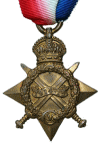
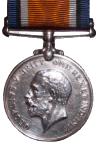
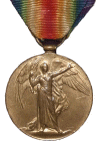
Gunner RMA/10131 John Patrick McCormack

Regiment/Unit: Royal Marine Artillery - (RMR/IC/28). H.M.S. 'Good Hope.'
Theatre of War: At Sea
Theatre of War First Served: South Atlantic
Date Entered Therein: August 1914
Age at death: 31
Date of death: 1st of November 1914
Born: St Helens, Lancs
Resided: St Helens, Lancs
Burial / Memorial: Portsmouth Naval Memorial - 5.
BMD details:
D.O.B. 14.10.83. - St Helens, Lancs. Marriage: 24/04/1910 Joannem P McCORMACK to Saram E HULME at Holy Cross RC.
Family details:
Son of James and Mary McCormack, of St. Helens; husband of Sarah E. McCormack, of 47, Pocket Nook St., St. Helens, Lancs.
Census details:
1891 - 5 years old schoolboy John P, widowed mother Mary M McCormack (nee Bailey) (27) and siblings: Elizabeth McCormack (7), Michael McCormack (3), Richard McCormack (1) are staying at 5 Park Road, Parr, St Helens which is the home of grandparents Patrick Bailey (65), Margaret Bailey (54) and relatives John Bailey (26), Pat Bailey (24), Bernard Bailey (21), James Bailey (19), Thomas Bailey (16), Sarah T Bailey (13). Also at the address are lodgers Thomas Greenall (25), Thomas Wynne (28), Thomas Hovan (37), James Wynne (32), William Doran (45). 1901 - Not found. 1911 - Sees 27 year old 'Gunner R M A' on board a vessel at midnight on Sunday 2nd April 1911.
Notes:
CWGC have his surname as 'McCORMICK'
CWGC have his surname as 'McCORMICK'
HMS Good Hope
[pic]imgs/S1PWHYAOTV/hmsgoodhopeatsea.jpg[/pic][caption]H.M.S. Good Hope[/caption]
The Armoured Cruiser, HMS Good Hope, flagship of the South Atlantic squadron under Rear Admiral Sir Christopher Cradock. Built in 1901 as one of a "Class" of four known as the "Drake" Class, they were obsolete at the outbreak of the First World War in August 1914. On paper they look like powerful ships, carrying a broadside battery of sixteen 6 inch guns (eight on each side), twelve 12 pounders (six a side in casemates) and two 9.2 inch guns in two single turrets.
The great weakness in this design is the arrangement of the batteries. The lower "Battery Deck" is so close to the waterline that in any sort of seaway, the ship is liable to rolling the lower battery of guns under and rendering them unusable in a battle. This is what happened to Good Hope and her consort Monmouth when Cradock attempted to engage the more powerful ships of Graf von Spee's East Asiatic Squadron off the Coronel Coast of South America on 1st November 1914 in a rising gale and heavy seas.
The well balanced and better designed pair of heavy armoured cruisers, Scharnhorst and Gneisenau swiftly overwhelmed Good Hope and Monmouth, both lost with all hands, German records state: Engaged by Scharnhorst - 8-8.2in guns versus 2-9.2in, third salvo put forward 9.2in out of action followed by serious hits to the forepart, upper bridge and foretop, repeatedly hit amidships setting her on fire, after turret hit twice, large explosion between mainmast and after funnel at 1950, flames reaching 200ft, ship left silent and dead in the water. Von Spee lost contact around 2000 and ordered his light cruisers to search for the two large British ship that were presumably damaged and finish them with torpedoes, Good Hope was not found but went down around this time, her end not seen in the darkness and the driving rain; 926 lives lost - 52 officers, 871 ratings and 3 canteen staff, no survivors.
The unfavourable weather conditions allowed the light cruiser Glasgow and the Armed Merchant Cruiser Otranto to escape. They joined up with the pre-Dreadnought battleship Canopus - Cradock had been ordered to wait for her to join him before he engaged the German squadron (and her twelve inch guns would have made at least some difference), but decided to act rather than be accused of failing to engage the enemy.
Even the Admiralty had difficulty understanding Cradock's decision, particularly as it was known that the Scharnhorst and Gneisenau were superior ships and they had with them three light cruisers, Dresden, Nurnburg and Leipzig
At the Falklands a few months later when von Spee attempted to attack the capital, Port Stanley, and was in his turn surprised by the emergence of the battlecruisers Invincible and Inflexible. In an almost one sided fight, the two battlecruisers destroyed Scharnhorst and Gneisnau; Kent (burning her Wardroom furniture to supplement a shortage of coal!) caught and sank the Nurnburg; Cornwall and Glasgow caught and sank the Leipzig. There were no survivors from the Scharnhorst and only 90 of a crew of 400 from the Gneisenau.
The 14,400 ton HMS Good Hope was sunk with the loss of her entire complement of 900 hands, including Craddock in the Battle of Coronel, on 1 November 1914, off the Chilean coast. Even if Gunner McCormack had survived the battle then it was highly unlikely that he would have survived for very long in the freezing waters of the South Atlantic. His body was never recovered.
90% of the crew of HMS Good Hope where in fact Reservists. The Ship left Portsmouth on the 2nd of August 1914 and there would have been little time for training.
(Researched By Jeff Keenan)
[center][pic2]imgs/S1PWHYAOTV/McCormack_J_Portsmouth.jpg[/pic2][/center][caption]The inscription on the Portsmouth Naval Memorial for Gunner John McCormack[/caption]
SEE ALSO Gunner RMA/10206 [cas=1748]Frederick Stubley[/cas] who also served on the same ship.