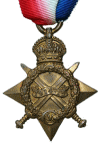
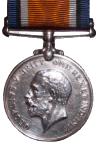
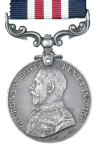
Private 241651 Bernard Corrigan

Regiment/Unit: South Lancashire Regiment - 1st/5th Bn.
Theatre of War: France & Flanders
Theatre of War First Served: (1) France
Date Entered Therein: 13/10/1915
Previous Reg/Num: 4099, S Lancs R.
Age at death: 21
Date of death: 4th of December 1917
Born: Ormskirk, Lancs
Resided: St Helens, Lancs
Burial / Memorial: Honnechy British Cemetery - I. B. 16
Family details:
Address from MIC: 8 Critchley Street, Parr, St Helens.
Census details:
1901 - Shows 4 years old Bernard living at 20 Elliot Street, St Helens with his parents John (31), Mary E (27) and two siblings: Catherine (2), James (8 Mths). 1911 - Sees 15 years old 'Glass House Worker' Bernard living at 31 Elliott Street, St Helens with his parents John (41), Mary E (38) and five siblings: Catherine (13), James (11), John Thomas (9), Peter (5), Joseph (3).
Notes:
M.M.
M.M.
In addition to the usual trench attrition of enemy shelling, sniping, etc., one of the most dangerous activities undertaken by the British forces were Trench Raids.
Usually, these were tasked with bringing back information on who the enemy were (which units), what they were up to and (ideally) capturing some prisoners (especially officers) and documents. The raids would last for a couple of hours at most and always ended up with the British troops back behind their own lines.
The 1/5th Battalion of the South Lancs Regiment was based in the Ypres sector in November 1916. The War Diary entry for 5th November says:
'Raid on enemy lines. Left party very successful but no enemy encountered. Right party held up in the gap by enemy machine guns and trench mortars. Result 17th reserve Division identified. Casualties - 2 OR killed, 4 OR wounded.'
The officer in charge of the raid would also have to write up a report, and I have come across the report of the above raid, and transcribed it below.
'Report of a raid carried out by the 1/5th South Lancashire Regiment on the night of 5th/6th November 1916
1. During the 4th and 5th November the 55th Divisional Artillery successfully cut two gaps in the wire, each about 25 yards wide; these gaps were kept open during the night by occasional 18 pounder and machine gun fire.
2. Zero was fixed for 12.30 a.m. on the 6th at which time a rolling barrage was opened on to the enemy's trenches in the locality selected for the raids and at two other points on the enemy's front. This was the signal for the raiding party to close up as near as possible to the barrage, preparatory to entering the German trenches. At Zero plus 5 the rolling barrage moved back by lifts of 50 yards per minute to a box barrage enclosing the area to be raided. This artillery barrage was continued with heavy Artillery and field Howitzers firing on selected points in the vicinity and sweeping the Communications tranches and approaches with 60 pounders. At Zero plus 5 it was intended that the raiders should enter the German trenches.
3. The raiding parties left their trenches at 12 midnight 5th, and moved towards the gaps in enemy's wire.
4. The right party were delayed in reaching the gap in the wire, the tape men could not get on, as they observed a party of Germans in the gap, and waited till the Germans disappeared. On arrival at the gap the first group were delayed by concertina wire which had been run out across the gap. A few of the right party succeeded in entering the German trenches but the opposition there was very strong, bombs, machine guns, trench mortars, and rifle grenades being used against this party who were unable to penetrate, and returned to our trenches on the signal to return. However, the left blocking party of the right party got to and occupied their appointed position in front trench. The Corporal and two men were wounded but number 4099 Rifleman B. CORRIGAN remained at his post though bombed from both sides until signal for withdrawal was given. The right party withdrew on the signal, carrying their casualties with them.
5. The left raiding party was more successful. After penetrating the gap in the wire which was 25 yards wide, the first group formed blocks in the enemy's trenches to the right and left of the gap. The second group went straight through the gap in wire over enemy's first trench, and moved to South side of pond. Between enemy's front line and EITEL FRITZ FAMR buildings (50 yards from front line) traces of wire were found. A path was found running from farm round S.E. of the pond to the communication trench at point I.5.b.66.46. One of the parties searching the farm were bombed and a machine gun opened fire from a communication trench about I.5.b.66.46. This party also returned at s8ignal to retire.
6. The party that raised the saphead at I.5.b.31.65 found it blown in and deserted.
7. Parties report generally that the enemy's trenches were 7 to 10 feet deep, very dry and well revetted with brushwood and timber and trench boarded. Many deep drains were made almost like communication trenches.
8. The Artillery wire-cutting was good and done with a small expenditure of ammunition. The barrage during the raid was well placed and the shooting good.
9. The raiding parties did not find any German casualties nor did they secure any prisoners, but were rewarded by finding documents in a dugout which definitely established the already suspected presence of the 17th Reserve Division on this front.
Other records show that three men actually died on that date; Privates Frank Boffey of Ardwick, Manchester, Daniel Johnson of Sandbach, and George Taylor of Windle City, St. Helens. All now rest in adjacent graves in Vlamertinghe Military Cemetery. From this, it can be deduced that their comrades brought their bodies back to the British lines.
It is unusual for an 'Other Rank' to be named in reports, so the entry about Rfn 4099 B Corrigan stands out.
Private 4099 Bernard Corrigan (later renumbered to 241651) lived at Elliott Street, off Knowsley Road, St Helens. Before the war he was employed as a Glass House Blower.
He arrived in France on 13th October 1915 and records show that he was awarded the Military Medal. As it was gazetted on 6th January 1917, it seems almost certain that he was awarded the MM for the action on 5th November.
Some 12 months later, on 30th November 1917, the Battalion were in the line close to VILLERS-GUISLAIN. The diary reports that the enemy attacked in large numbers around 7:20 a.m.. Many of them worked their way southwards and attacked the battalion from the rear, and long after the enemy had advanced, fighting could be seen around Battalion HQ. 'The fighting qualities of the regiment were displayed at their best and a wonderful example had been given'.
It would appear that almost 60 men were killed in this action. None of them has a known grave and they are all remembered on the Cambrai memorial. About sixteen more died of their wounds over the next few days.
Amongst them was Bernard Corrigan, who died of wounds on 4th December 1917, aged 21. he rests in Honnechy British Cemetery.
Originally posted on St Helens Connect -
[url]http://www.sthelens-connect.net/forums/topic/58001-4099-private-bernard-corrigan-15th-bn-south-lancs/[/url]
[pic]imgs/WW1_misc/CorlessBernard.jpg[/pic][caption]Army Registers of Soldiers' Effects, 1901-1929[/caption]
[pic]imgs/WW1_headstones/BCorrigan_SLR.jpg[/pic][caption]The headstone of Private Bernard Corrigan MM at Honnechy British Cemetery
(Photograph courtesy of Ste M.)[/caption]