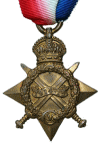
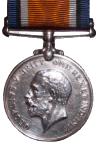
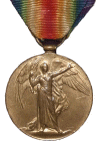
Able Seaman J/35928 John Mitchell
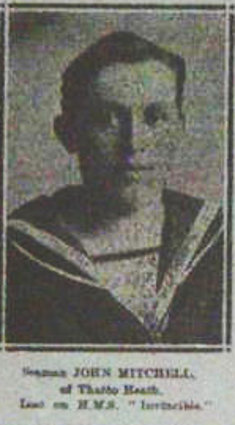
The St Helens Newspaper & Advertiser
Courtesy Ste M
Regiment/Unit: Royal Navy - H.M.S. 'Invincible'
Theatre of War: At sea
Age at death: 19
Date of death: 31st of May 1916
Born: St Helens, Lancs
Resided: St Helens, Lancs
Burial / Memorial: Portsmouth Naval Memorial - 13
BMD details:
Birth Date: 25 Apr 1896
Family details:
Son of Samuel Thomas Mitchell, of 16, Stevens St., Thatto Heath, St. Helens, Lancs.
Census details:
1901 - 3 years old John is living at 12, Stevens Street, Thatto Heath, St Helens with parents Samuel Thomas (32), Ellen (27) and brother William (1). 1911 - Sees 14 years old 'Box Labeller' John living at 36, Heath Street, Thatto Heath, St Helens with (widowed?) father Samuel (42) and five siblings: William (11), Arthur (9), Emily (6), Harold (1), Ethel (1).
Notes:
[url=lmem.php?lmem=20]Remembered on St John the Evangelist, Ravenhead War Memorial[/url] [popup=https://en.wikipedia.org/wiki/Battle_of_Jutland]Wiki - Battle of Jutland[/popup]
[url=lmem.php?lmem=20]Remembered on St John the Evangelist, Ravenhead War Memorial[/url] [popup=https://en.wikipedia.org/wiki/Battle_of_Jutland]Wiki - Battle of Jutland[/popup]
[pic]imgs/WW1_misc/MitchellJohn_RN.jpg[/pic][caption]The St Helens Reporter - Courtesy Ste M[/caption]
[pic]http://upload.wikimedia.org/wikipedia/commons/thumb/2/26/HMS_Invincible_%281907%29_British_Battleship.jpg/300px-HMS_Invincible_%281907%29_British_Battleship.jpg[/pic]
[center][url=http://en.wikipedia.org/wiki/Battle_of_Jutland]Battle of Jutland[/url][/center]
HMS Invincible
On 3 August 1914 the Invincible was sent to Cobh (then Queenstown) on the Cork coast, to guard against any attempted German breakout into the Atlantic. Once that danger had passed, she moved to the Humber, to form the 2nd Battle Cruiser Squadron with HMS New Zealand.
The Invincible took part in the battle of Heligoland Bight on the 28th August 914., the first significant naval encounter of the war. The battlecruisers arrived at 12.30pm, after the battle had been underway for some time, and prevented an increasingly strong German cruiser force from mauling the lighter British cruisers and destroyers that had been involved in the first part of the battle.
On 4 November 1914 the Invincible was ordered south to the Falklands to take part in the hunt for Admiral von Sree's cruiser squadron after the battle of Coronel. She left Devonport on 11 November and arrived at Port Stanley on 7 December. The next day von Spee arrived to attack Port Stanley. After a two hour chase, Invincible and Inflexible caught up with the Scharnhorst and Gneisenau and in a three hour battle sank both of them. Only one of Spee's ships, the Dresden escaped, to be hunted down later. See Jonathon Martindale and Frederick Stubley.
Jutland.
The Invincible was the last of the three British battlecruisers to be lost during Jutland, where she was the flagship of Admiral Horace Hood. In May 1916 the 3rd Battle Cruiser Squadron had been sent to join the Grand Fleet to get some invaluable gunnery practise. This squadron led the advance of the Grand Fleet from Scapa Flow which came close to catching the German High Seas Fleet. At around 6.15 p.m. Hood's battlecruisers joined with Beatty's force in the battle against the German battlecruisers. The Invincible opened first at 10,000 yards, disabling the Wiesbadenand the Pillau, two light cruisers (although the Pillau later escaped). The Invincible also scored two hits on the Lutzow, but was exposed to fire from that ship and the Derffinger. The fifth hit, from Derfflinger, hit the roof of Q turret, penetrating the thinner battlecruiser armour. The explosion set fire to the cordite propellant, the flash spread back to the magazine and the ship was blown in half. Only seven of her crew survived, 1031 perished.
Extract from the Official History; " Naval Operations" by Sir Julian S. Corbett. 1923
.................At 6.32 Admiral Beatty reached his station ahead of the battle fleet. Ahead of him again was Admiral Hood with his three battle cruisers, leading the fleet, and leading it in a manner worthy of the honoured name he bore. Upon him was concentrated the fire of three or four of Admiral Hipper's five ships. Under pressure of the oncoming British Dreadnoughts they had turned again to the southward. For the past ten minutes the action between them and the " Invincibles " had been growing hot upon similar courses, and Admiral Hood with Captain A. L. Cay, his flag-captain, at his side was directing it from the bridge. Having the advantage of the light he was giving more than he received. The range was down below 9,000 yards, but it was the greatest that visibility would permit, and he was doing too well to alter. " Several shells," says Commander von Hase of the Derfflinger, " pierced our ship with a terrific force and exploded with a tremendous roar which shook every seam and rivet. The captain had again frequently to steer the ship out of the line to get clear of the hail of fire." So heavy was the punishment he was inflicting that Admiral Hood hailed Commander Dannreuther, his gunnery officer, in the control top, and called to him, " Your firing is very good. Keep at it as quickly as you can. Every shot is telling." They were the last words he is known to have spoken. Just then the mist was riven and from the Derfflinger her tormentor was suddenly silhouetted against a light patch of sky. Then as another salvo from the Invincible straddled her she began rapid salvoes in reply, in which probably the Konig joined with as many. One after another they went home on the Invincible. Flames shot up from the gallant flagship, and there came again the awful spectacle of a fiery burst, followed by a huge column of dark smoke which, mottled with blackened debris, swelled up hundreds of feet in the air, and the mother of all battle cruisers had gone to join the other two that were no more. As her two consorts swerved round her seething death-bed they could see she was rent in two; her stem and stern rose apart high out of the troubled waters as though she had touched the bottom, and near by a group of half a dozen men were clinging to a life raft, cheering the ships as they raced by to continue the fight. So in the highest exultation of battle, doing all a man could do for victory, the intrepid Admiral met his end, gilding in his death with new lustre the immortal name of Hood............
[center][pic2]imgs/S1PWHYAOTV/J35928_John_Mitchell_zps622ed541.jpg[/pic2][/center][caption]The panel on the Portsmouth Naval Memorial
bearing the inscription for Able Seaman John Mitchell[/caption]