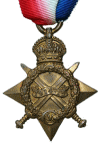
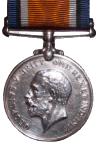
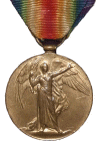
Able Seaman 229160. (Dev) Alexander McCall

Regiment/Unit: Royal Navy - H.M.S. 'Lion'
Theatre of War: Buried At Sea
Age at death: 28
Date of death: 31st of May 1916
Born: St Helens, Lancs
Resided: St Helens, Lancs
Burial / Memorial: Plymouth Naval Memorial - Panel 12.
BMD details:
Birth Date: 21 Mar 1888
Family details:
Ward of William Harrison, of 129, Devon St., St. Helens. Native of St. Helens, Lancs.
Notes:
[popup=https://en.wikipedia.org/wiki/Battle_of_Jutland]Wiki - Battle of Jutland[/popup] Naval awards in the name of Alex McCail. SDGW in the name of Alexander McCall. St Helens Cenotaph in the name of McColl.
[popup=https://en.wikipedia.org/wiki/Battle_of_Jutland]Wiki - Battle of Jutland[/popup] Naval awards in the name of Alex McCail. SDGW in the name of Alexander McCall. St Helens Cenotaph in the name of McColl.
[pic]imgs/sppics/Able_SeamanAlex_McColl.jpg[/pic][caption]Commonwealth War Graves.[/caption]
[pic]imgs/S1PWHYAOTV/HMS_Lion_Jutland_zps4385351a.jpg[/pic][caption]HMS Lion[/caption]
HMS Lion was a battlecruiser of the Royal Navy launched in 1910, the lead ship of her class (known as the "Splendid Cats"). She weighed 29,680 tons full load, and was armed with eight 13.5 inch guns.
In World War I she fought at the battle of Heligoland Bight, 28 August 1914, and served as David Beatty's flagship at the battles of Dogger Bank, 24 January 1915 and Jutland, 31 May 1916, and was sold for breaking in 1924 under the terms of the Washington Naval Treaty.
At Dogger Bank, she scored a somewhat lucky hit on Seydlitz which caused a cordite flashback which burned out the latter's two rear turrets. While it nearly resulted in the destruction of the Seydlitz, the Germans gained crucial insight into improving magazine safety that would make the difference in the future battle of Jutland.
In response she was struck by a salvo from the German battlecruiser Derfflinger which crippled her, forcing her to fall out of line and Admiral Beatty to lose control of his squadron until he transferred his flag to HMS New Zealand.
Jutland.
The Lion was once again Beatty flagship at the Battle of Jutland. She opened fire on the German battlecruisers at 3.45pm on 31 May, at what Beatty believed to be a range of 18,000 yards, but was probably significantly shorter. The German battlecruisers opened fire at the same time, and their somewhat shorter ranged guns had no problem hitting their targets. The Lion was hit by two shells that pierced her hull in the first ten minutes of the fight.
The most dangerous blow came at 4.03pm, when a heavy shell hit Q turret, entered the gun-house and exploded over the left gun. The explosion hilled most of the gun crew and caused a fire that threatened to spread to the magazine, destroying the ship. The Lion was only saved by Major F. J. W. Harvey, the Marine officer in charge of the turret, who despite being mortally wounded ordered the magazine doors to be shut and the magazine flooded. He was awarded a posthumous V.C. for his actions, which probably saved the Lion from the same fate as the Indefatigable, which exploded at almost the exact same time.
At 4.30 Beatty sighted the German battleships and the run to the north began. During this phase of the battle the Lion was hit again around Q turret, and was only saved by the flooded magazine. During the battle the Lion was hit by thirteen 12in shells from the Lutzow suffering 99 dead and 44 wounded.
Extract from the Official History; " Naval Operations" by Sir Julian S. Corbett. 1923
.........with main and secondary armament in action the German salvoes were being delivered about every twenty seconds, and our ships too were in a forest of waterspouts. It was one of the hottest moments of the action, when every nerve had to be strained to the utmost, and Admiral Beatty, having the enemy well abaft his beam, signalled to the 13th Flotilla that it seemed a good opportunity to attack. Five minutes later, while the fight still raged at its hottest, the Lion received a nearly fatal blow. A heavy shell struck Q-turret, entered the gun-house, burst over the left gun, and killed nearly the whole of the guns' crews, and it was only the presence of mind and devotion of the officer of the turret, Major F. J. W. Harvey, R.M.L.I., when almost incapacitated with a mortal wound, that saved the flagship from sudden destruction...
After Jutland the Lion once again needed extensive repairs. Q turret had to be removed entirely and was repaired on land, leaving the Lion with three turrets from July to September 1917. In November 1916 Beatty was promoted to command the Grand Fleet and the Lion became the flagship for Rear-Admiral Pakenham. Although there were no major battles after Jutland, the battlecruisers did go to see on a number of minor operations during the last two years of the war, amongst them the action in Heligoland Bight on 17 November 1917. After the war she was retained until 1923 as flagship of the 1st Battle Cruiser Squadron, but was then sold off under the terms of the Washington Treaty, and sold for break up in 1924. Her main guns were removed and used as coastal defence guns.
[pic]imgs/WW1_memorials/Alexander_McCall.jpg[/pic][caption]Plymouth War Memorial[/caption]